Earlier I posted about my not so great early look at my first homebrew. That was from a test done earlier in this week using a bottle which had matured 1 week and then stayed in the fridge for a little under a week. Today is the two week in bottle mark so I decided to pull one bottle from the batch to pour it and test it. To be totally honest I figured it would be not too far off from my original test but the results were dramatically different.
There is carbonation. A good amount of it. I still think it will be a better move to use the sugar in the bottling bucket next time but this does alleviate one of my fears relating to that I may have to drain the entire batch due to flatness. As a side note I also believe my fridge may have been set a bit too cold as well which could have been a (small) factor in the lackluster carbonation in the first trial.
The smell is much improved. The smell from the first test is hard to describe but the best I can come up with is banana, sugar and some spices. It wasn’t un-heffe like but it was still off. The smell now is much more of a solid banana and spice aroma.
The look has improved as well. The first test had a darker tone to it. Maybe it was related to flatness but, no matter what the reason, this has a darker (but not dark) wheat look to it.
My Hefeweizen in poor lightWheat Beer in amazing light (Photo credit: Wikipedia)
This makes me feel a lot better about homebrewing. I’ve been a bit rocky thinking I made too many mistakes and preparing for the worst but things are looking up!
And it’s not so hot. At least not right now. Granted it was put in the fridge early as a test run to see where things stood. The problems are making sense to me. First, I think it may be better to try putting sugar in the bottling bucket instead of each bottle individually. The test bottle was hardly carbonated at all even taking into consideration that it was an early pull. Second, there is a bit of a musky after taste. I think this is from the air leaking in during siphoning. It could also be from letting it age too long for the recipe. I’ll be pulling another bottle soon to check carbonation. Here’s hoping it carbs up and the musky after taste mellows out while aging!
This Nexus 4 has only been with me a short time but I can already see why the guys and gals who got their hands on the original batch of devices have raved so highly about them. Here’s a short run down of my thoughts so far…
The Look
Nexus 4 (Photo credit: abuakel)
The device is understated for what one expects from flagship devices. By that I mean the Nexus 4 is not meant to draw eyes to it or make you the talk of the cool guy crowd. It’s meant to look like a lot like every other Android device out there. Not exactly like others but close enough that by glancing it wouldn’t stand out. The main thing that does stand out when focusing on the device is the back due to it’s sparkle/glass look. It actually does make the device look special without forcing it’s ‘coolness factor’.
As a side note it’s nice to have fewer brand names thrown all over the back. I’ve had phones which had multiple brands plastered on it followed by reminding me (and everyone around me) the brands ‘involved’ in the device. The Nexus 4 says Nexus and has a smaller LG logo near the bottom. The front is refreshingly brandless. Bootup also avoids yelling about it’s Google and LG makers. I love it!
The Form
Like the look the form isn’t much different than many other current generation Android devices but does have a slightly larger screen than my previous SGS II. To be honest I really like that as I’ve grown accustomed to the general Android device slate. Where it does part ways with most of it’s siblings is in how well the build feels. It’s light without feeling cheap. It’s thin without feeling frail. I’m not totally sure why the back is glass (other than giving it a slightly different look on focused look) but I have to assume that ends up adding to the positive build feel.
General Usage
Better than the app. (Photo credit: ario_)
Hopefully every Android device manufacturer is taking notice of this device because this thing is exactly how I want to use a phone. First off I didn’t have to spend time hiding a bunch of ‘value added’ applications that I’ll never use. The amount of telco bought devies I’ve had which forced me to keep NASCAR or Blockbuster installed even though I never used either is a sad number.
Next, the device is fast. Really fast. I’ve been on the Tegra everywhere bandwagon and now I’m thinking Snapdragon really may be where it’s at for phone size devices. Then there’s the fact the device is running stock Jelly Bean. This means no Sense, TouchWiz, etc… Just Android the way it was meant to be. No extra value is added which makes it much more valuable.
Most of the applications the one expects are there so I won’t jump into them but Google Now is something I can see using pretty often. Don’t get me wrong, this is not my first Jelly Bean device. I have a Nexus 7 which I’ve been very happy with, but the Google Now software on a device that only has wifi access does not do Google Now justice.
The camera seems quite good so far. To be fair I have not used it much yet but here is a test photo I took in moderate to low light in a coffee shop. For a more in-depth look at the camera look at TechRadar’s review.
Medium/Lower to low light indoor photo. No flash.
Some Downsides
Nothing is perfect but wow does the Nexus 4 come close! Two of the three downsides are minor and only are noticeable one time only.
SIM Size
The first thing I did after charging the new device was to pull the SIM card from my old device for use in my new one. I should have noticed when reading about the Nexus 4 that it uses a Micro-SIM. Not a big deal but it did require a run to the closest telco store to get one.
(Photo credit: Wikipedia)
Initial Usage
There was a decent amount of updates ready to be installed upon first usage. An OS update along with many application updates. It would be nice if Google could use the latest ROM when shipping new batches. Again, not a big deal at all but still would be nice.
Storage
This is what kept me from buying it originally. The storage is capped at 8 or 16g which doesn’t sound like a good deal for those of us who keep our music library with us at all times. There are options that limit this as an issue. Using Google Music, Amazon Cloud Player, Subsonic, Pogoplug, etc.. can keep your music collection within reach as long as you have a data connection but each has it’s own downsides as well. My annoyance is generally with the quality of the music player for the services. It’s not that they are bad players but they are feature poor compared to many of the locally players.
tl;dr
(Photo credit: JD Hancock)
If you are in the market for a new Android phone right now then there is no better option than the Nexus 4. While not perfect it’s downsides are few and are heavily overshadowed by how well the device works both in terms of physical feel and software. A real Jelly Bean experience, great build quality, no telco lock in and really fast. Did I mention you don’t have to put up with apps forced on you by telcos? Assuming that the device is currently available in your region there is not a reason to avoid it. Go get it!
I have a Raspberry Pi and it’s pretty great. I have an Arduino Esplora and an Arduino Micro and they are fun. Though, as I’ve played more with the Arduino I’ve found one totally understandable drawback: it’s more or less local only. I mean that the data that comes back through sensors or the items being controlled only send response back over serial or USB/serial. It makes sense but it also limits what can be done with it when used all by itself. One of my early ideas for a project was to use a light and a temperature sensor to keep an eye on aging homebrew beer. Nothing super fancy, just records the information for viewing and alerting when the sensors see data outside of the accepted norms. I could do this with some LED’s, buzzer or a display that would notify me when things were off but that isn’t really the type of alerting I’d like to see. That type of alerting would require me to go look at the box for information. I might as well do the sensor gathering manually with my eyes and feeling inside the box. It also means the data would be lost on every iteration. Data from 10 minutes ago could only be gathered if I was present 10 minutes back. Enter Raspberry Pi.
The Raspberry Pi is able to power the Arduino Esplora and, likely, the Arduino Micro. Since communication is over USB/serial the Raspberry Pi can collect the data from the sensors and provide a networked view into the data. For instance, a web interface showing temperature and light graphs. And, best yet, it’s simple to add a USB wireless adapter to the Pi to avoid running an ethernet cable back to the network.
Now, from what I read, it’s possible to use Raspberry Pi itself without an Arduino to collect data and control devices but it requires an ADC for analog input/output. But there is something that seems more proper about separating the physical logic (using C in Arduino) from the notification and reporting logic (using Python on a Raspberry Pi). It feels almost MVC like.
In any case, if you are looking at doing some analog and digital stuff with a Raspberry Pi do know that adding a small Arduino makes life easy and, if you decide to change to another device for providing network views it should be a simple switch over.
Cream Ales, spawned from the American light lager style, are brewed as an ale though are sometimes finished with a lager yeast or lager beer mixed in. Adjuncts such as corn or rice are used to lighten the body. It is no uncommon for smaller craft brewers to brew all malt Cream Ales. Pale straw to pale gold color. Low hop bittering and some hop aroma though some micros have given the style more of a hop character. Well carbonated and well attenuated.
The description doesn’t do a whole lot for my tastes being that I don’t enjoy light lager. Still I’d expect to like craft takes on the brew. I’ve had two or three since I started sampling beers and have enjoyed zero of them. Zero.
I’ve found them to have little or no body, almost no flavor and lots moderate carbonation. The last one I sampled was Carolina Strawberry from Foothills which had a taste reminiscent of strawberry Clearly Canadian.
So, who actually goes for these cream ales? Is it really just there to help the bud light drinker feel like they enjoy beer? Have I not had a good example of the style? This is a serious question!
Last night I ordered some sensors for use with my new Raspberry Pi but I just could not wait to play with sensors. I ran up to the closest electronics store at 10am to buy the last Arduino Esplora in stock.
This is a pretty new addition to the Arduino line up. It comes with multiple sensors pre installed on the board as well as a library to make programming with the sensors a little too easy. It’s a bit pricier than the other boards but for something to learn on and do some random project prototyping it seems ideal.
After about 15 minutes I was already reading data off the sensors and reading it back from the serial console. But since I want to learn more about using the sensors I’ll be porting the project to the lower level API once I’ve finished prototyping on the Esplora library. The Esplora library makes it really easy but I feel like it’s hiding a lot of I want to learn. At this point I have a periodic temperature check which is holding current temperature, all time and relative averages and printing it back over serial in JSON. Now I just need to figure out how to both power the board and get its data over to either a Raspberry Pi or machine somewhere so I can trend and alert. I’m worried about the differences in volts between the two but I’m sure there is a safe way to interface and power. My first project is to keep an eye on the temperature and light levels of my homebrew to ensure proper aging!
I couldn’t help it. I’ve watched other open source friends rave about playing with the Raspberry Pi but had yet to really jump in on it all. See, I bought a GuruPlug a while back and had kind of a bad experience with it. You know, overheat and shut off. In fairness the manufacturer of the device did provide a hardware fix quite a while later, but I’d already moved on and forgotten why I bought the device in the first place. It took the consistant praise from online friends and one conversation with my friend Andrew to get me to take the plunge.
Yesterday it arrived in a nondescript package. A simple yellow padded envelope. Opening it up I saw two small boxes. Funny thing is the larger of the two boxes is actually the wall plug. But I didn’t have time to do anything other than prepare an SD card with raspbian on it. But today I’ve thrown it on the network (headless) and have an ssh connection in to update the default system.
Now I’m at a bit of a loss or, I should say I’m not sure where to start. I picked up a breadboard, wires and LED’s to do a little playing around. I’m just not sure what I want to do for a longer term project. I’d like to start working with some sensors and pick up more knowledge in that space. I have some more components on the way but it will be a while. Maybe I’ll snag a Arduino while I wait.
After posting a list of what I’ve been reading consistently over the last few months a reader noted I should give Team 7 a go. I had read #0 early on and thought the idea seemed interesting but didn’t end up following through. I used Comixology to pick up all available issues so far to give it a fair shake. These are my thoughts.
Note: these are overall thoughts for the current #0-#4 run.
Characters
Amanda Waller
Man is she boring. I really miss the old 52’s chubby, smart and powerful Waller. Yeah, she wasn’t an action hero but she was more interesting than fit, strong analyst Waller. Some one please give her a cheese burger! It only takes a bad diet for her to be awesome.
Slade Wilson
Slade makes a lot of sense on this team (and he isn’t the only one). I’ve found his character interesting over the years but find him most interesting when he is a part of the story (and not the story itself). He adds that rougher merc style which adds balance to the team.
Cole Cash
As someone who never read many Wildstorm comics (before my comic reading time) I know little about Cole. Of everyone he is closest to the understating jokester of the group and it works. So far I put him in the same camp as Slade: really good on a team book but not sure solo books would be interesting.
James Bronson
This guy is probably my favorite on the team. He’s the big guns and us without the in your face attitude. Of all of them he seems the most trustworthy and most eager to do things right. It’s nice to have that kind of presence on a team.
Dinah Drake
Black Canary but so far not a whole lot from her. She is there but, other than her dynamic with future husband Kurt Lance who is stated as her team weakness, there isn’t much to pick her out in the story (yet?).
Kurt Lance
In some ways he seems like the new kid. He has talents for finding things but no real field operations experience. In issue #1 he almost dies falling during a landing maneuver… something no one else had an issue with in the slightest. Not sure what this finding talent or background that Waller eludes to is yet but I’m positive it will be revealed in time.
Summer Ramos
Seems like the hot shot pilot who knows she’s the best. With exception to the very start of the arc she has been absent.
Alex Fairchild
Another Wildstorm original. Apparently a coworker of Slade who is more about money and having fun. Not a ton about him yet but he does seem to have a jokester personality not too different from Cash.
Dean Higgins
Strategist with the amazing ability to change ethnicities. He acts in some ways as the voice of the boss when in the field. Not much else yet except really silly glasses that make him look like a 90s character.
See the glasses?
Thoughts
So far there is a good balance of personalities but there is still a lot to learn about the team members. As long as the writer focuses on the team dynamics more than highlighting previously known and popular characters I can see this working. I also can’t help but wonder if at least one character is here just to he can be knocked off….
Story
In a nutshell the story is a lot like a science fiction/military action movie mashup. It’s pretty fast moving, lots of weapons and much less focused on super human abilities at this point.
Issue #1 is all about starting the first arc while getting quick bios on the cast. If you know much about DC bad guys there are some really strong hints dropped about who they will be up against. I called it at that point and was validated at the end of issue #2.
Issues #3 and #4 lead up to and down from this arcs main villain who seemed to take a fall a little to quickly. Not too easily mind you, just too quickly. I’m not sure if this is due to some pacing issues or if there is a reason that will be disclosed later on in the stories.
Art
The art in issue #1 and #4 is quite good though some of the character designs the artist is working with doesn’t always help. Again, Higgins. Issue #2 is not bad but issue #3 seems like it’s, for lack of a better term, over Inked. It also has a bit of a rushed feel. Thinking back on issue #3 Cole’s hair stands out as looking rushed as it is too angular and stiff.
Don’t misunderstand me, none of the art is bad. I’d love to have half of the artistic talent of any of them.
Longevity
Based on its premise I’m pretty sure this will run for a few years at best. That’s not a bad thing but it may also scare some readers away being that it is not billed as a limited series. It should be obvious that there is only so much time to explore between the formation of this team and the start time of the Justice League. If the book gets canceled rather than ending on its own it can mean that a story drags on longer than it should with tons and tons of tie ups condensed in a few issues in an attempt to finish the overall story. I can’t think of a time in which that was a good thing. Let’s hope the writers have a specific ending in mind.
Conclusion
It’s not a bad book especially if you like the action team style stories. If you were a big fan of Wildstorm there is no reason to avoid this book assuming you can accept it as a new take on a previous idea. I can see this being read best in trade form but picking up the current back issues via Comixology can give a similar feel. It’s worth the read and I will be following it for at least another few issues to see how things pan out for the team.
Final gravity of 1.010, ABV 5% and bottled on January 19, 2012. I have a feeling that it’s going to be super heavy banana and clove. We’ll see. But like the brewing before, bottling was not frustration free due to me learning how to use the tools as we bottled.
As a quick aside I was slightly worried fermentation wasn’t happening as it should because I saw hardly any bubbles at all in the primary airlock. Turns out the lid just isn’t tight enough to form a good seal.
The first hurdle was with Star San, or more so, it’s label. After making the diluted Star San mix and starting the sanitization process I noticed the front warnings which said all kinds of terrible things. I tend to take things at their word and started to get seriously frustrated that I was going to need to wash my hands for 20 minutes and call poison control due to touching the diluted mixture. After venting a while and speaking with seasoned home brewers I found that lots of people have no issue with the properly diluted mixture.
The next was in using the autosiphon. I followed the instructions exactly as it said to do but yet the siphoning didn’t continue after a few pumps. I tried over and over until I finally realized the tubing supplied was allowing a small amount of air in stopping the siphoning. Right away I was annoyed that air was flowing with the unfinished beer! Once I figured out that air was seeping in I pinched the siphon hard and manually pumped the beer from primary to bottling bucket. Next time I’m going to make sure the tubing in use is way too snug.
The last issue was in filling the bottles. While switching out bottles it wasn’t uncommon for there to be enough pressure in the line to cause beer to spray out of the line/spigot connection point. It wasn’t a ton but still caused issues and forced faster bottling to avoid losing beer. I’m not sure what I did wrong there but I’m sure it was me somehow.
Next batch should go a lot smoother. Both brewing and bottling attempts were huge learning experiences as well as failed experiments with frustration management. I’m looking forward to sampling the results and trying it all again. The waiting is killing me!
In 2001 a game was released that I so badly wanted to play. It was called Majestic and was one of the first alternate reality game with a lot of game press and hype. I wanted to play it due to the blur between reality and game as the game takes place in real life — but just with false facts. I remember reading that one could change the level of realism for the game. For instance you could configure it so that any communication that came your way would be prefixed by a notice that it was from the game, with a marker of some kind or simply not differentiate itself at all. Or at least something like that could be done.
In conversations with my friends I found out that I was the only person I knew who thought this could be fun. My friends would state things about how it would be to much of an interruption to life or that people with severe mental problems could be sucked into the game believing it as reality. As it turned out there was not enough love for the game for it to continue and, sadly, I never got to give it a go myself.
Years went by where I figured the genere had been put in to a corner where only AR geeks would dare go. Half baked sub-indie attempts, extreme role playing guilds and stupid marketing tie-ins. None of these seemed that fun to me. I actually thought about trying to write my own (as in the server application for an ARG) as that seemed more fun than joining one of those ARG-but-not-really-ARG games.
Then Google released Ingress and I waited for an invite. I signed up for the closed beta. More waiting. And then a coworker passed me an invite and I was in.
I loaded up the game and went through the tutorial which confused me. See, I thought I was actually playing in the tutorial and not just learning how to play. I looked around and saw no portals (except the tutorial one) and though that maybe my area was not that hot for playing. Then I realized it was not the full AR but just a tutorial and got into the game proper.
Still confused. I saw these large green things on my device. There wasn’t anything explaining to me what these were so I assumed it meant ‘out of bounds’ areas. Of course later I learned what this meant. I actually played the game for a few weeks before realizing that they were Control Fields. If it wasn’t for my coworker essentially being the instructor of the game mechanics I’d probably of grown tired of being confused.
Once I got the hang of the game running to locations with portals became fun. Granted, I couldn’t do much yet a I was a level 1 agent in a level 4 or higher world but I still I knew I was helping. And it got better. Like any good ARG there was a community which was very active. And not just active within faction but outside as well. While playing it is faction versus faction but we all can have fun outside of the ARG together as well. How great is that?
I’m so glad that today there is the Ingress Field Guide which is exactly what I could have used when I joined up. It explains the dynamics of the game much in a way that Google should have done itself. If you get to join the closed beta take the time to read it guide.
Some Issues
I think that Google not providing information is probably the biggest detriment to the game as people can easily get confused, bored or frustrated especially if there is no community already established in an area.
Another issue is in smaller cities in towns where portals are, at best, very sparse. In such areas I think they should start to place some portals based on people who have joined in the area so that there is something for them to target. When I visited the place I lived previously I found there to be 5 or so portals in the entire city even though there was probably enough players to have many more portals. I have a feeling that those players will get frustrated or bored fighting over the same 5 portals. Even as I left I noticed most of the portals were owned by one of the factions and were high enough level that I doubt the other faction could do much back (unless there was an Op coming in from other cities).
The last issue I see is in balance. If either faction becomes too powerful they can dominate and sort of force the other faction from playing any longer. This takes time (and a whole lot of effort from the first faction) but it’s possible. The only fix for this is in rules and game balance as set by Google. We will see how they fix this over time.
But Worth It
Even with it’s faults I’m having a lot of fun and meeting people I normally would have never met. People in different industries. Folks from different backgrounds. People traveling in from different areas. The game is still evolving and the player base continues to grow as well. If all goes well the issues will be addressed by Google over time. The game is still in closed beta so changes and fixes are likely to continue. But even if they don’t fix all the issues the game is still a blast right now!
 There is carbonation. A good amount of it. I still think it will be a better move to use the sugar in the bottling bucket next time but this does alleviate one of my fears relating to that I may have to drain the entire batch due to flatness. As a side note I also believe my fridge may have been set a bit too cold as well which could have been a (small) factor in the lackluster carbonation in the first trial.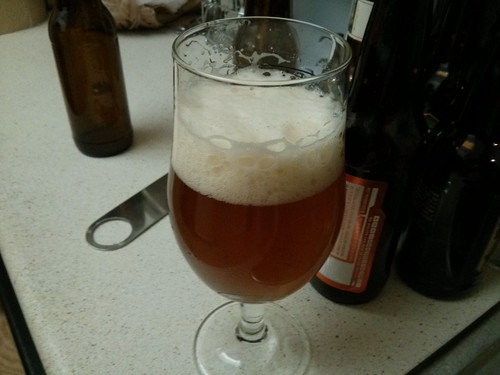


 Steve's Blog